
As African cities heat up, a new book argues trees are part of the solution
A newly released book documenting urban forestry efforts across Africa argues that trees and green spaces are no longer a luxury for African cities, but a critical response to climate change, biodiversity loss, and urban inequality. Published by Johannesburg City Parks and Zoo (JCPZ), Urban Forests and Green Spaces in Africa: Case Studies and Lessons […]
A newly released book documenting urban forestry efforts across Africa argues that trees and green spaces are no longer a luxury for African cities, but a critical response to climate change, biodiversity loss, and urban inequality.
Published by Johannesburg City Parks and Zoo (JCPZ), Urban Forests and Green Spaces in Africa: Case Studies and Lessons from Across the Continent brings together 34 case studies from 14 African countries, covering everything from restoring biodiversity around wetlands in Rwanda’s capital Kigali, creating Miyawaki forests (forests with native trees planted closely together) in Kenya’s capital Nairobi, greening heat-stressed neighborhoods in Zimbabwe’s capital Harare, transplanting baobabs in Senegal to rehabilitating degraded urban land in South Africa.
Hot days, hot nights, and heatwaves have become more frequent across Africa, concludes the Sixth Assessment Report of the Intergovernmental Panel on Climate Change, the world’s most authoritative scientific assessment on climate change. The report also finds that coastal cities are vulnerable to floods related to rainfall events and sea level rise.
As African cities experience rising temperatures, worsening floods, biodiversity loss, and rapid urbanization, the book argues that urban forests and green infrastructure are essential tools for climate resilience. Beyond storing carbon, trees and green spaces can cool cities, reduce air pollution, improve water quality, support biodiversity, and provide mental and public health benefits — making them critical to the future sustainability and livability of African cities, argue experts.
The 170-page volume draws on contributions from 74 authors, 80% of them African, according to the publishers of the compendium.
“The decisions made in the next decade, about what we plant, where we plant it, who has access to green spaces, and how we protect what we have, will shape the livability of African cities for generations,” writes Thanduxolo Mendrew, managing director of JCPZ, in the book’s foreword.
With science increasingly conclusive on the role of trees in helping societies adapt to and mitigate the effects of climate change, several African cities have embraced tree-planting campaigns and urban restoration initiatives. In Kenya, for example, a restoration practice known as the Miyawaki method has helped establish mini forests in parts of Nairobi since 2007, with more than 236,000 seedlings planted between 2011 and 2020. Recent research covered by Mongabay also found that green spaces across 60 schools in the Nigerien cities of Niamey and Maradi are helping reduce extreme heat, improve learning conditions, and provide food and income opportunities. At the continental level, the African Forest Landscape Restoration Initiative has mobilized significant funding toward the restoration of 100 million hectares (about 247 million acres) of degraded land in Africa by 2030 – an area almost twice the size of Kenya.
But as restoration and tree-planting campaigns multiply across the continent, questions are increasingly being raised about the types of trees being planted and the long-term ecological impact of some of these initiatives.
In one of the case studies drawn from the South African city Johannesburg, one of Africa’s largest cities, the book highlights how city authorities are increasingly shifting away from planting large numbers of exotic trees toward a more diverse mix of indigenous species. In South Africa’s Guateng province, the Alexandra township’s Jukskei Park project is supported by the city with residents helping restore native vegetation, remove invasive plants, recycle waste, expand green spaces and rehabilitate the river system. Newly planted species include Celtis africana and Combretum erythrophyllum. The authors ultimately advocate for a balanced approach: prioritizing diverse indigenous tree species while retaining some well-adapted exotic trees that communities continue to value.
“Indigenous species and locally adapted ecological practices should be central to urban greening strategies,” argues Emiru Birhane Hizikias, a restoration ecologist at Mekelle University in Ethiopia. In a review of the book shared with Mongabay, Hizikias notes that a recurring concern is that many urban greening initiatives prioritize aesthetic tree planting — often involving imported or non-contextual species — rather than ecologically grounded restoration.
Six case studies from Kenya, Tanzania, Uganda, Rwanda, Ethiopia, and Madagascar show that urban forestry in East Africa is increasingly being treated not just as beautification, but as climate and public health infrastructure. The studies highlight lessons ranging from Nairobi’s Miyawaki mini forests and Karura Forest restoration, to Kigali’s community-led eco-parks and Kampala’s climate resilience planning.
The book recommends that African governments protect and restore at least one major natural forest? area within their capital cities, drawing lessons from Kigali’s Nyandungu Eco-Park and Nairobi’s Karura Forest.
Across the East African region, the case studies stress the importance of protecting existing green spaces, prioritizing indigenous and diverse tree species, involving communities in stewardship, and linking urban greening to biodiversity, public wellbeing, and climate adaptation.
The West African case studies highlight both the promise and tensions surrounding urban forestry. In Ibadan, Nigeria, researchers document how an urban forest in a city long associated with forestry research was cleared for a high-end housing estate, underscoring how rapid urban expansion and inequality continue to threaten green spaces.
In Ghana, another study found that trees along public streets are especially vulnerable to vandalism and poor maintenance, requiring greater long-term care and community protection. Across the region, the case studies stress that urban greening must go beyond beautification and include equitable access, stronger protection of existing forests, and sustained local stewardship.
The publication has already drawn attention from urban forestry practitioners outside Africa. Mexican arborist Edgar Ojeda told Mongabay that many of the dynamics described in African cities — including unequal tree cover and pressure on green spaces — closely mirror realities in Latin America.
He urged policymakers to begin seeing trees as “living or biological infrastructure” rather than decorative additions to cities.
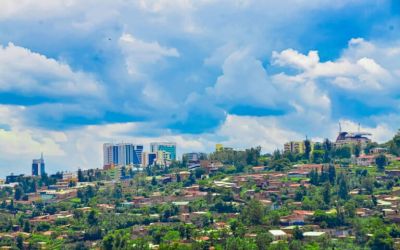
Banner image: A view of Kigali, Rwanda’s capital. The book notes that Rwanda is one of the few African countries with official guidance on urban forests. Image by Pacifique Gatete via Wikimedia Commons (CC BY-SA 4.0).
Kenya’s cities adopt Miyawaki method to restore lost ecological glory
New arrangements should preserve Nairobi’s much-loved Karura Forest